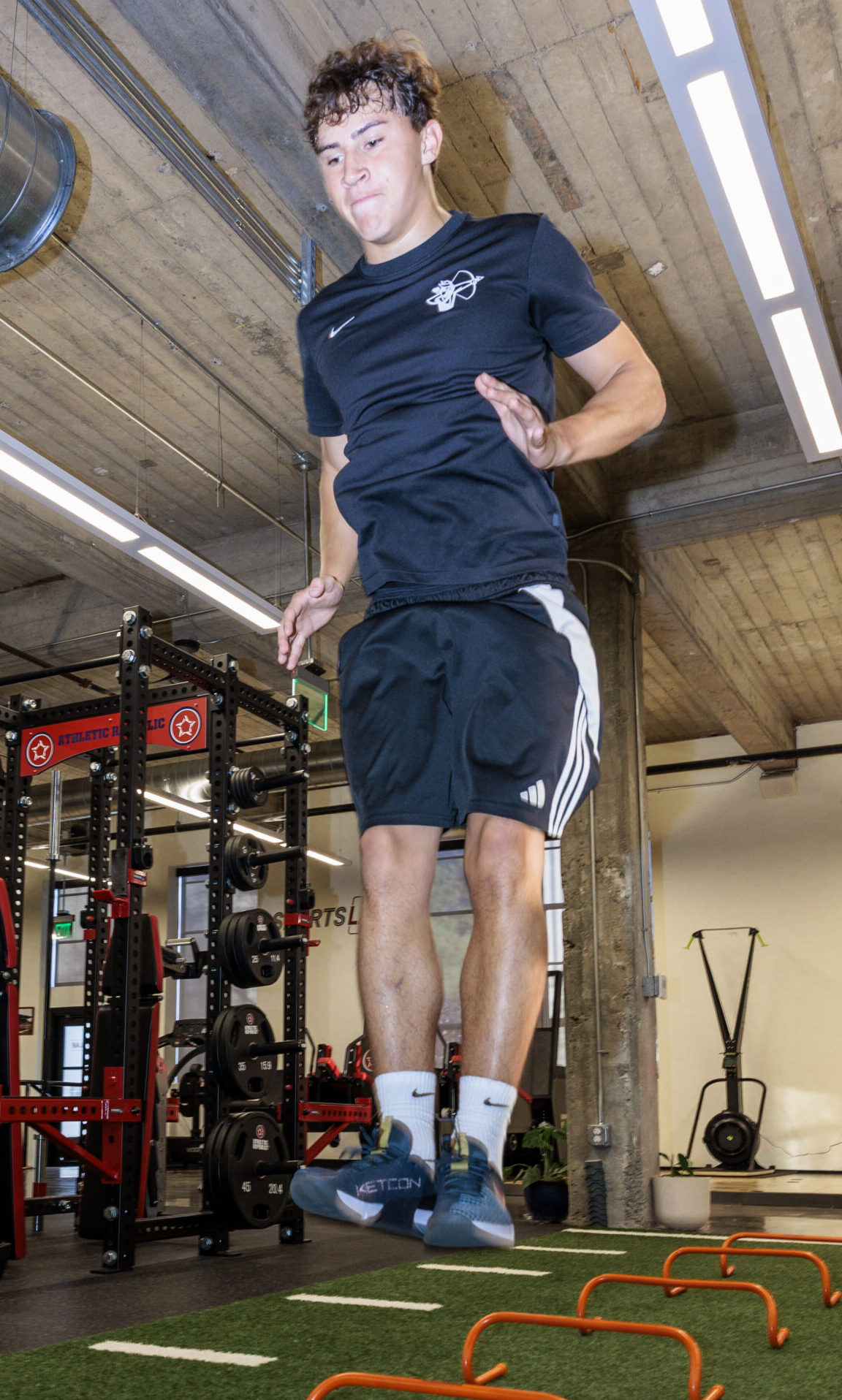
Athletic Republic Portland Training Philosophy: Who We Are, What We Do, Why We Do It, and How We Train
Training should be about more than completing a hard workout.
At Athletic Republic at SportsLab in Portland, our goal is to create structured, intentional training that helps athletes become stronger, faster, more resilient, and more confident over time.
Our approach to sports performance training in Portland is centered around three primary concepts: Performance, Prevention, and Long-Term Athletic Development.
For us, prevention does not mean promising that injuries will never happen. Sports come with inherent risk. Instead, we focus on building stronger, better-prepared athletes who have the physical capacity to handle the demands placed on them.
The goal is not simply better performance today. We want to help develop physical qualities and training habits that can continue benefiting our athletes throughout their sporting careers and long after those careers are finished.
Who We Are
Athletic Republic Portland works with a wide range of athletes and active adults.
On any given week, our facility might include a young athlete learning how to train for the first time, a high school hockey player, a marathon runner, a professional basketball player, an equestrian athlete, someone competing in roller derby, or an adult who simply wants to become stronger and move better.
Their sports and goals may be very different, but the foundation of our approach remains the same:
Build strong fundamentals, develop important athletic qualities, and provide athletes with progressive training that supports their long-term development.
Our coaching staff is CSCS-certified, and our training options include group classes, semi-private training, and private training.
Our group programs follow structured training plans designed around the goals and developmental needs of the athletes in that program. Within those sessions, our coaches can make appropriate adjustments to exercises, loads, progressions, or movement variations when needed based on an athlete’s training experience, ability, or current limitations.
Semi-private and private training give us the opportunity to become more specific when an athlete has individual goals, needs, or areas that require additional attention.
Being located within SportsLab also gives our performance staff access to physical therapists and other health professionals. Athletic Republic Portland remains focused on performance training, but that environment creates opportunities for communication and collaboration when an athlete’s needs extend beyond traditional strength and conditioning.
What Do We Actually Train?
Our training is designed to develop the physical qualities that allow someone to become stronger, faster, more powerful, and overall more athletic.
- Strength
- Acceleration
- Speed
- Power
- Plyometric ability
- Landing and force absorption
- Change of direction
- Agility
- Coordination
- Full-body movement capacity
Strength is an important part of that foundation because nearly every athletic action requires an athlete to produce, absorb, or redirect force.
Sprinting requires force.
Jumping requires force.
Stopping and changing direction requires force.
The goal is not simply to make athletes stronger in the weight room. We want to develop strength and then teach athletes how to apply their physical abilities effectively during athletic movement.
Research in youth athletes supports this relationship. Resistance training has been shown to improve muscular strength and vertical jump performance while also contributing to improvements in other measures of athletic performance. [1]
Athleticism Is More Than Running Fast
Speed matters, but athleticism is broader than straight-line speed.
Agility, for example, includes the ability to rapidly change speed or direction in response to a stimulus. That distinction matters because athletes rarely know exactly what is going to happen next during competition. They must see, process, react, and move. [2]
Our training therefore includes a combination of sprint mechanics, acceleration training, plyometrics, agility work, strength training, and movement development.
A session might include wall acceleration drills to teach sprint mechanics, landing progressions, box jumps, broad jumps, hurdle jumps, trap bar deadlifts, squats, lunges, upper-body strength work, and core training.
Each one of our exercises is chosen and included for a specific purpose within the programming.
Plyometric training is one example. Research has shown that appropriately programmed plyometric training can improve jumping, sprinting, and other measures of athletic performance in young athletes. [3]
Why We Train This Way
Fundamentals Build the Pyramid
We like to think about athletic development as a pyramid.
At the top are the things people often associate with high-level athleticism: sprinting fast, jumping high, producing explosive power, reacting quickly, changing direction, and performing highly demanding sport skills.
But the top of the pyramid can only be supported by the foundation underneath it.
Fundamental movement skills, coordination, strength, and the ability to control the body help create that foundation.
The better developed that foundation becomes, the more tools we have available when we begin asking an athlete to perform increasingly difficult tasks.
That matters for beginners, but it does not stop mattering when someone becomes an advanced athlete. The exercises and demands may change, but foundational physical qualities remain important throughout an athletic career.
This concept is central to Long-Term Athletic Development, or LTAD. Research and professional consensus support a structured, logical, and evidence-based approach to developing athleticism in children and adolescents. [4]
Why Strength Matters
Strength training is incorporated throughout our programs because its benefits extend beyond simply lifting more weight.
When appropriately designed, coached, and progressed, resistance training can be a valuable component of youth physical development. International consensus recommendations support youth resistance training when programs are appropriately prescribed and supervised. [5]
Strength gives us a physical quality that can contribute to an athlete’s ability to produce force.
From there, we can work on expressing that force quickly and efficiently through sprinting, jumping, acceleration, and other athletic movements.
Research examining resistance training in youth athletes has reported improvements in muscular strength, jumping ability, and other measures of physical performance. [1]
Being strong by itself does not automatically make someone fast or athletic. Strength is one part of the bigger picture.
Our job as coaches is to help athletes connect those qualities.
Training Should Prepare Athletes for Sport and for Life
We also believe our responsibility extends beyond preparing someone for their next game or season.
Competitive sports eventually end for everyone.
For most athletes, that happens before the collegiate or professional level. NCAA participation data shows how much the competitive population narrows as athletes progress from high school into college and then into professional sports. [6]
We absolutely want our athletes to improve their performance and pursue whatever level of sport matters to them.
But we also want what they learn through training to remain valuable when competition ends.
Knowing how to strength train, understanding how your body moves, learning how to progressively challenge yourself, and developing positive habits around physical activity can provide value for decades.
That long-term perspective is also part of the LTAD model, which emphasizes developing athletic qualities while encouraging physical activity and fitness behaviors that can continue later in life. [4]
Whether someone’s final competitive season happens in middle school, high school, college, or professional sports, we want them to leave with a physical foundation that helps them continue to Move Better Longer.
How We Train: Test, Teach, Train, Track
Athletic Republic’s Test, Teach, Train, Track methodology gives us a simple framework for putting this philosophy into practice.
Test
Testing gives us an opportunity to gather objective information about athletic performance.
Depending on the athlete, program, and training situation, that might include movement assessments, strength measurements, sprint times, jump testing, force-plate data, or other performance measures.
We use tools including force plates, laser timing gates, jump measurement systems, and strength-testing equipment to help put objective information behind what we observe as coaches.
Not every athlete needs every test, and testing does not replace coaching. Instead, it gives us another tool to evaluate performance, establish benchmarks, and monitor change when appropriate.
Teach
Teaching is a major part of the training process.
Before asking athletes to perform movements faster, heavier, or more explosively, we first need to teach them how to perform those movements effectively.
That may include sprint mechanics, landing technique, strength-training movements, coordination, or other foundational skills.
Especially with developing athletes, good coaching is about more than simply telling someone which exercise comes next. We want athletes to understand how to move and gradually become more confident and capable.
Train
Next, we train those qualities.
This is where intentional programming comes into the process.
Depending on the program and training goals, sessions may include strength work, sprinting, plyometrics, acceleration, agility, power development, conditioning, mobility, or other methods.
Our group programs are structured around common training goals and developmental needs, while coaches make adjustments when needed to keep the training appropriate for the athletes in the session.
Semi-private and private training allow for more individualized programming when an athlete needs a more specific approach.
We also organize sessions intentionally.
Movements requiring high levels of speed, coordination, technique, and explosive power are generally trained while athletes are relatively fresh. From there, we can progress into strength development and complementary exercises addressing additional strength, movement, stability, or mobility needs.
The goal is not to exhaust someone as quickly as possible.
The goal is to create the appropriate training stimulus and get the best possible quality from the work we are asking them to perform.
Track
Finally, we track what happens.
One of the most important questions we can ask as coaches is:
Is the training producing the changes we are looking for?
Depending on the athlete and program, that may mean formal retesting, monitoring performance in training, tracking strength progress, watching movement quality, or looking at changes across a training block.
Tracking gives us information we can use to evaluate the effectiveness of our programs and make adjustments when necessary.
For athletes who train with us over longer periods of time, this can also help us develop a broader picture of how their performance changes through different training cycles, competitive seasons, periods away from training, growth and development, and potentially following injury.
The goal is not for data to replace coaching.
The goal is for good coaching and useful information to work together.
Athlete Development Is an Ongoing Process
Athletes change.
They grow. They get stronger. Their sports become more demanding. Their schedules change. They experience successful seasons, difficult seasons, injuries, growth spurts, and new challenges.
Training should be able to progress with them.
That is ultimately what our performance philosophy is designed to accomplish.
We test when objective information can help guide or evaluate the process.
We teach the skills and qualities athletes need.
We train those qualities through structured, intentional programming.
We track progress and adjust when necessary.
Then we continue building.
Whether someone is stepping into structured training for the first time or competing at a high level, our goal remains the same: help them build the physical foundation to perform now while developing the strength, skills, and confidence to continue moving forward.
Ready to Start Training?
You do not need to have everything figured out before you walk through our doors.
Whether you are a young athlete just beginning structured training, a high school athlete looking to become stronger and faster, or an adult looking to improve your overall athleticism, our team can help you find the right place to start.
For many athletes, that starts with one of our group training programs, where we develop strength, speed, power, movement, and overall athleticism in a coached and progressive training environment.
For athletes who need more individual attention, have specific performance goals, or would benefit from a more customized approach, we also offer private training and semi-private training.
The most important thing is simply finding the training environment that matches where you are now and where you want to go next.
Try a Free Group Training Session
Try a Youth Athlete Training Session
Try a High School Performance Training Session
Try an Adult Group Fitness Session
Not Sure Where to Start?
Our team is happy to help you find the training option that makes the most sense for you or your athlete.
Call Athletic Republic Portland: 503-542-2744
Athletic Republic at SportsLab | Portland, Oregon
Move Better Longer
References
- Lesinski M, Prieske O, Granacher U. Effects and Dose-Response Relationships of Resistance Training on Physical Performance in Youth Athletes: A Systematic Review and Meta-Analysis. British Journal of Sports Medicine. 2016;50(13):781-795. View the resistance training study on PubMed
- Sheppard JM, Young WB. Agility Literature Review: Classifications, Training and Testing. Journal of Sports Sciences. 2006;24(9):919-932. View the agility review on PubMed
- Effects of Plyometric Training on Adolescent Sports Performance: Systematic Review and Meta-Analysis. View the plyometric training review on PubMed
- Lloyd RS, Cronin JB, Faigenbaum AD, et al. National Strength and Conditioning Association Position Statement on Long-Term Athletic Development. Journal of Strength and Conditioning Research. 2016;30(6):1491-1509. View the LTAD position statement on PubMed
- Lloyd RS, Faigenbaum AD, Stone MH, et al. Position Statement on Youth Resistance Training: The 2014 International Consensus. British Journal of Sports Medicine. 2014;48(7):498-505. View the youth resistance training consensus on PubMed
- NCAA. Probability of Competing Beyond High School. View NCAA participation data