
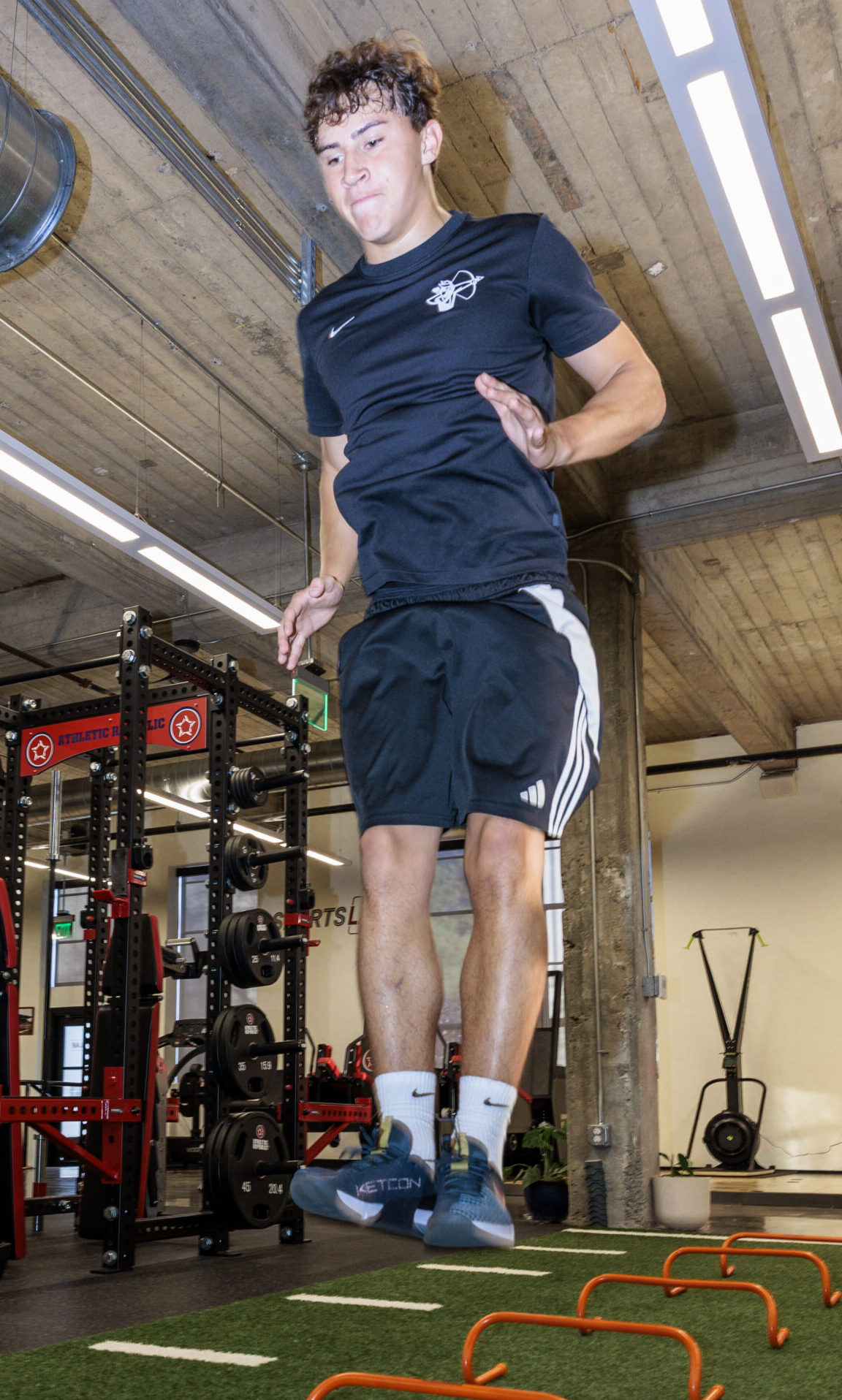
Why In-Season Training for Athletes Matters
Estimated read time: 4–5 minutes
In-season training for athletes is about maintaining the strength, speed, power, and movement qualities developed during the offseason without adding unnecessary fatigue during competition.
Athletes spend months preparing for their season.
They get stronger. They get faster. They develop power, improve movement quality, and build the physical capacity they need to compete.
Then the season starts, schedules get busy, and performance training is often the first thing to disappear.
But if we spend the offseason developing those qualities so an athlete can use them during competition, why would we stop training them as soon as competition begins?
That is where in-season training becomes important.
The goal is not to continue training exactly like we did during the offseason. The goal is to maintain strength, speed, power, and movement quality while managing fatigue and helping the athlete perform when it matters most.
At Athletic Republic Portland, that means adjusting training around practices, games, tournaments, and the individual demands of each athlete.
What Happens When Athletes Stop Training In-Season?
Training adaptations are not permanent.
When an athlete stops providing the body with a particular training stimulus, some of those qualities can gradually begin to decline. A large meta-analysis examining resistance-training cessation found significant reductions in muscular strength and power, with greater losses occurring as the period without training became longer. [1]
The same general pattern appears in sport-specific research. A systematic review and meta-analysis of soccer players found detrimental effects of training cessation on physical qualities including vertical-jump performance and repeated-sprint ability after detraining periods of at least two weeks. [2]
Individual studies give us an idea of how quickly some changes can appear. In youth soccer players, approximately 2% deterioration in repeated-sprint performance was observed after a two-week period without specific training. Athletes who continued training during that period were better able to preserve repeated-sprint performance. [3]
That does not mean every athlete loses the same amount of speed, strength, or power on the same timeline. Training history, age, sport, competition demands, and the physical quality being measured all matter.
But the larger point is clear:
The qualities we develop in the offseason need continued exposure if we want to maintain them.
Why Late-Season Performance Matters
Think about what happens over a three- or four-month competitive season.
The athlete is accumulating practices, games, tournaments, travel, school stress, repetitive sport movements, and general fatigue.
If structured strength and performance training completely disappear at the same time, the athlete can gradually move further away from the physical preparation they developed before the season.
Then we arrive at the most important part of the year:
- Playoffs
- Championships
- Tournaments
- Showcases
- Important late-season games
Those are the moments when we want athletes performing at their best, not when we want them at their weakest and most physically depleted.
Some fatigue late in a season is unavoidable. The goal is not to make athletes feel as though they have not competed for three months.
The goal is to avoid combining that normal competitive fatigue with an unnecessary loss of physical capacity.
Think of Athletic Development Like a Staircase
One of the simplest ways to think about long-term athletic development is as a staircase.
We do not want:
Every offseason should not be spent trying to regain everything an athlete lost during the previous season.
Instead, we want:
The offseason gives us an opportunity to raise the athlete to the next level.
During the season, our goal is to maintain as much of that new level as possible.
Then when the next offseason begins, we can build from a higher starting point instead of starting over.
Over several years, that creates the stair-step progression we want from developing athletes.
What Is the Goal of In-Season Training?
In-season training is primarily about maintenance and readiness.
We want to maintain:
- Strength
- Speed
- Power
- Movement quality
- Mobility
- Physical resilience
Athletes may still improve in some areas during the season, but we do not need to chase personal records every week.
Instead, we want athletes physically prepared to perform their sport while limiting unnecessary fatigue.
Research gives us a useful example of how little training may be required to make a meaningful difference.
In one study, professional soccer players completed a 10-week preseason strength program before entering a 12-week competitive period. Athletes who continued strength training once per week maintained their improvements in strength and 40-meter sprint performance. Players who trained only once every other week experienced reductions in leg strength and 40-meter sprint performance. [4]
That is one reason we generally like to see athletes train twice per week when schedules allow, while recognizing that one quality session per week can still be extremely valuable.
For athletes looking for structured student athlete training in Portland, the goal should be consistency without forcing an offseason workload into the competitive season.
In-season training should never become all or nothing.
How Should In-Season Training Be Different From Offseason Training?
In-season workouts should look different from offseason workouts.
One of the biggest changes is volume.
We may use fewer exercises, fewer total sets, fewer repetitions, shorter workouts, and more mobility and movement preparation.
But lower volume does not mean everything needs to become easy.
Athletes still need meaningful strength, speed, and power exposures. The goal is high-quality training with a smaller dose.
A productive in-season strength training session might only take 20 or 30 minutes.
We also have to account for what the athlete is already doing.
A soccer game that includes repeated high-speed running counts as a high-intensity exposure. A basketball game contains accelerations, decelerations, jumps, and landings. Football, lacrosse, volleyball, baseball, and other sports each come with their own physical demands.
Those stresses need to be considered when deciding what an athlete needs outside of their sport.
Training should support the sport, not compete with it.
Prime the Athlete, Don't Drain the Athlete
Warm-ups, mobility, and preparation become even more valuable during the season.
Months of throwing, sprinting, kicking, jumping, cutting, landing, and competing create repetitive stress.
A good in-season session can help athletes move, increase blood flow, maintain useful ranges of motion, and simply feel better.
There is also a psychological component. When an athlete feels loose, strong, explosive, and prepared, they can focus on competing rather than thinking about every area of stiffness or soreness.
That is why we constantly adjust training based on how the athlete feels and what their schedule looks like.
- Some days we train hard.
- Some days we reduce volume.
- Sometimes an athlete needs additional mobility or recovery work.
- Sometimes we modify an exercise because a knee, hip, shoulder, or other area is bothering them.
The program provides structure, but good coaching requires flexibility. That practical approach is also emphasized by longtime strength coach Mike Boyle, who has discussed consistency, low-volume programming, gradual progression, and avoiding unnecessary soreness as central principles of successful in-season training. [5]
CHAMPIONS ADJUST.
In-season training should do the same.
Does My Athlete Need In-Season Training If They Already Practice?
One of the most common questions we hear is:
“My athlete already practices four or five days per week. Why do they need another workout?”
They do not necessarily need more work.
They need training that supports the physical qualities required to perform that work.
Practice develops the sport.
Performance training helps maintain the strength, speed, power, mobility, and movement capacity that support the athlete while playing it.
That is why we offer in-season training through our sports performance training in Portland.
The goal is not to exhaust athletes between practices and games.
It is to provide an effective dose of training that keeps them strong, fast, prepared, and available throughout the competitive season.
Two sessions may be ideal.
One is still valuable.
Sometimes the workout is only 20 minutes.
What matters is continuing to give the body a reason to maintain what it worked so hard to build.
In-Season Training FAQ
How often should an athlete strength train during the season?
We generally like to see athletes train about twice per week when their schedule allows. During especially busy periods, one well-designed session per week can still provide a valuable strength and performance stimulus. Research in professional soccer players has shown that one weekly strength session can be enough to maintain previously developed strength and sprint performance over a 12-week competitive period. [4]
Will in-season strength training make an athlete tired for games?
It should not when the program is designed correctly. In-season training typically uses lower volume, shorter sessions, and careful scheduling around competition to limit unnecessary soreness and fatigue.
Can athletes lose strength and speed during the season?
Yes. Research on detraining shows that strength, power, repeated-sprint ability, and other physical qualities can decline when the appropriate training stimulus is removed for extended periods. [1] [2] Regular in-season exposure helps athletes maintain more of what they developed during the offseason.
BUILD IN THE OFFSEASON. MAINTAIN DURING THE SEASON. BUILD HIGHER NEXT YEAR.
That is how we create long-term athletic development instead of starting over every season.
HIGH SCHOOL ATHLETE FREE TRIAL YOUTH ATHLETE FREE TRIALReferences
- Bosquet L, Berryman N, Dupuy O, Mekary S, Arvisais D, Bherer L, Mujika I. Effect of training cessation on muscular performance: a meta-analysis. Scandinavian Journal of Medicine & Science in Sports. 2013;23(3):e140-e149. View on PubMed
- Clemente FM, Ramirez-Campillo R, Sarmento H. Detrimental Effects of the Off-Season in Soccer Players: A Systematic Review and Meta-analysis. Sports Medicine. 2021;51:795-814. View on PubMed
- Rodríguez-Fernández A, Villa JG, Sánchez-Sánchez J, Rodríguez-Marroyo JA. Effectiveness of a Generic vs. Specific Program Training to Prevent the Short-Term Detraining on Repeated-Sprint Ability of Youth Soccer Players. Journal of Strength and Conditioning Research. 2020;34(8):2128-2135. View on PubMed
- Rønnestad BR, Nymark BS, Raastad T. Effects of in-season strength maintenance training frequency in professional soccer players. Journal of Strength and Conditioning Research. 2011;25(10):2653-2660. View on PubMed
- Cressey E. Elite Baseball Development Podcast Episode 187: Mike Boyle on Long-Term Athletic Development, Inseason Training, and Training Your Own Kids. March 29, 2024. Listen to the episode


